Monday, November 15, 2021

DCon 2021

I attended DCon at the Anaheim Convention Center over the weekend, and it was the first event I've been to in two years.


The line seemed to be very long, but it actually moved very quickly even with checking for proof of vaccination at the door.


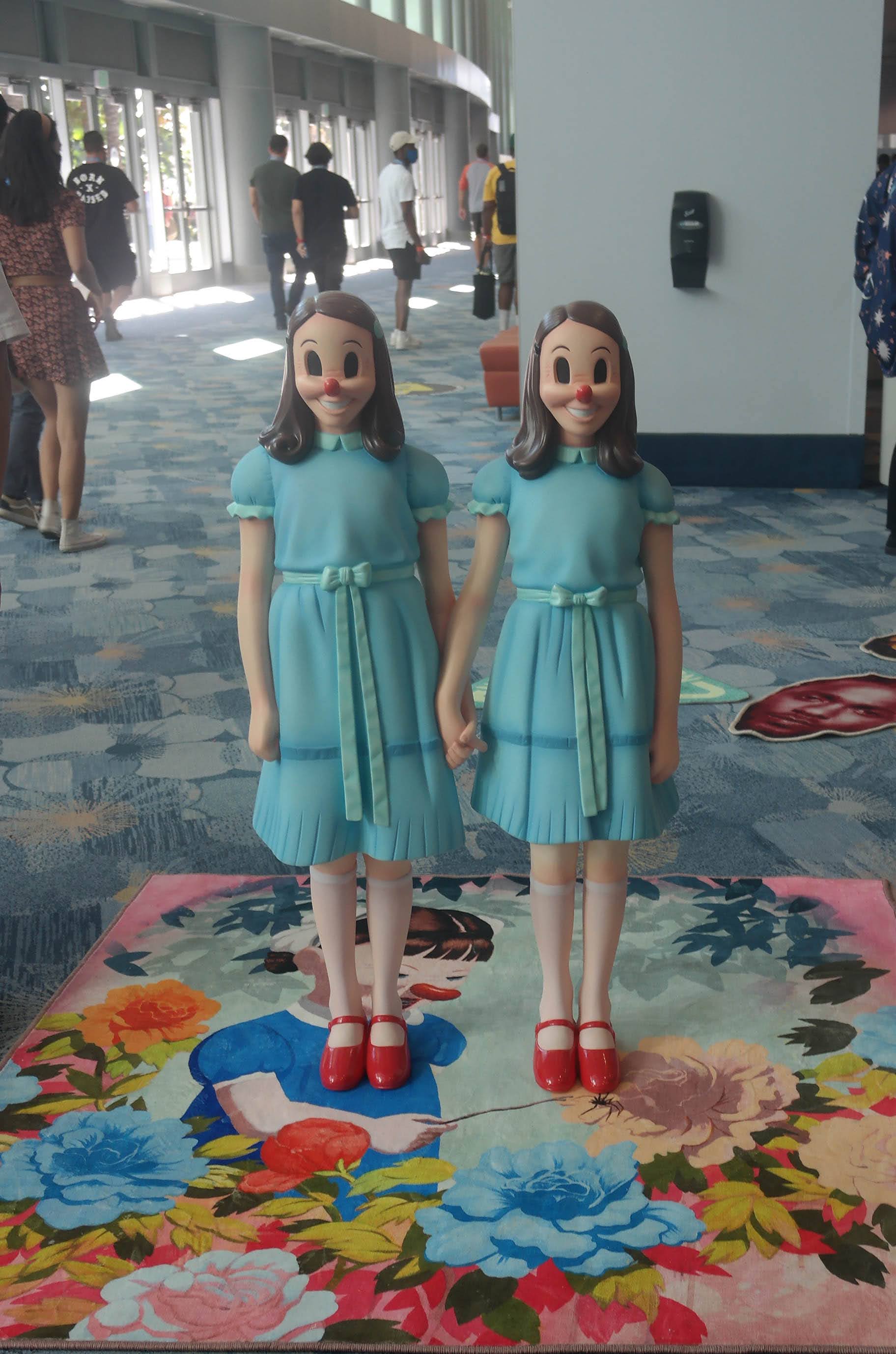
Various pieces were on display outside of the exhibit hall.

Autonomous logging robot
by Michael Marras

Come Play With Us
by Victor Castillo

Art toys from the Time Bandits booth.


Various subversive action figures from the DKE Toys booth.


Tokidoki was the only apparent overseas attendee at the con.


Goth cupcakes from Art of Miso.


Skull and taxidermy pieces by Brooke Weston.

Ram Ship


A doll in an iron mask from Ave Rose Art.


The item that I am most looking forward to are the upcoming sofubi Cthulhu toys displayed at the Mondo booth.


Some cool models at the FM Raw Toys and Art booth.

Tatogigeator

Gaaopilie

Some pieces from the Imperial Lotus Dragon Custom Show.


More assorted pictures.

2016 Ecto-1

Glass Ecto-1

Martian Toys mascot


Master 9 Eyes (M9E)

We Are Not Toys booth

I get the feeling that there were probably only two-thirds or half the number of vendors that attended in the past, but the number of visitors seemed high. I had a two day pass, but didn't bother going the second day. Still, it was good to go to an event after such a long time.


Sunday, September 12, 2021

Megadungeon

The traditional "dungeon" in D&D, video games, and fiction is often portrayed as the stronghold of an evil wizard or dark lord.


From Donjon by Sfar+Trondheim

Castlevania: Dracula X for SNES

Sometimes they are remnants of a lost civilization.


Yet despite their differences, it is presumed that all of these dungeons were built for some specific reason, and through the efforts of manual labor.

However, when it comes to megadungeons, there are many different thoughts regarding their nature since they do not always follow the type of logic that is referred to as Gygaxian "Naturalism".

DM David gives a nice overview of the subject, and mentions the influential article about mythic underworlds from Philotomy's Dungeons & Dragons Musings.

So where do these megadungeons come from? I image that the more mundane megadungeons are just much larger versions of standard dungeons.

Megadungeons such as Utumno from The Silmarilion seem to have been built just like a normal dungeon (albeit with the resources available to a deity).

Utumno by Ian Miller

Similarly, machines like the Builders (kensetsusha; 建設者) from Blame! can continuously build structures, to the point where they can entomb an entire planet.

From NOiSE

From Blame!

The living dungeon is also a concept that has been used in fiction. Typically, they are explained as a [super]natural phenomenon that appears in worlds where magic exists.

In DanMachi, the Dungeon is inimical to mankind, and the inhabitants are viewed as dangerous and irrational by the humans that seek to plunder the dungeon of its treasures.


Living dungeons in Dungeon Meshi on the other hand, are seen as more of a natural phenomenon. At least some dungeons can be controlled by the person who assumes the role of  lord of the dungeon.


The final type of dungeon that is closest to the mythic underworld is what I would consider the world within a witch's barrier (majo no kekkai; 魔女の結界) from Puella Magi Madoka Magica. The labyrinth (迷路) within the barrier seems to be created entirely from magic.


In the world of Madoka Majica, witches are created when magical girls reach peak despair. The FRPG world equivalent would be when magic users reach Wizard's Twilight (to use Ars Magica terms).

GERTRUD

As for actual mythic underworlds, I think of them more as the locations where HeroQuests take place, not places where adventurers go merely to kill things and aquire currency.


Monday, June 14, 2021

Misión de Santa Bárbara y Misión San Buenaventura

I went up to UCSB over the weekend to help out during move-out day, and stopped by a couple of the California Missions on the drive back home.

Obviously the first mission that I went to was Mission Santa Barbara. The mission is located in a picturesque neighborhood where many homes sit behind Mission Revival style sandstone walls or tall hedges.


At the front of the mission is a large lawn on which are a crucifix and a lavanderia.


Lavanderia water spout

Lavanderia

Just in front of the mission is a Moorish fountain, and the ubiquitous bell marker that can be seen all along the historic El Camino Real.

Moorish fountain

Bell marker

Wood structure of arcade

Arcade doorway


Mission church after 1925 earthquake.


Behind the church to the northeast is the mission cemetary, where the Lone Woman of San Nicolas Island was buried in an unmarked grave. The novel Island of the Blue Dolphins was based was upon her story.

The other mission I visited was Mission San Buenaventura. This modest mission is located at one end of the old Main St. area in downtown Ventura.


1912

The mission is fully modernized, and the grounds are now sites of both the parish school and church.


Heading east on Main St. is a promenade area open only to pedestrian and bicycle traffic. The streets are lined with cafés, restaraunts, brew pubs, thrift stores, antique shops, book stores, and many other specialty shops.


The Beaux-Arts style Bank of Italy Building is now home to a cocktail bar and a restaurant.


The First National Bank Building is noted as the location where Erle Stanley Gardner, author of the Perry Mason series, dictated his novels from his third floor law office. The bottom floor is currently a restaurant, while the upstairs are still professional offices.


Street art around downtown Ventura.


Monday, May 31, 2021

La Misión de San Luis, Rey de Francia

After close to a year and a half of doing only essential travel, I paid a short visit to the local mission in Oceanside before going to pick someone up from the train station.


The Mission San Luis Rey is the 18th California Mission, and is said to be the largest of the California Missions.


The mission was used as a location for the Zorro TV show by Disney back in the 50s.


The skull and crossbones over one of the cemetery gates is said to have been put there by Disney for the TV show.


Since it was late in the day, entry to the mission grounds was already closed, but there were still some places to look at outside of the mission.

Across from the mission are the adobe ruins of barracks for the mission garrison, which is now populated by ground squirrels and rabbits.


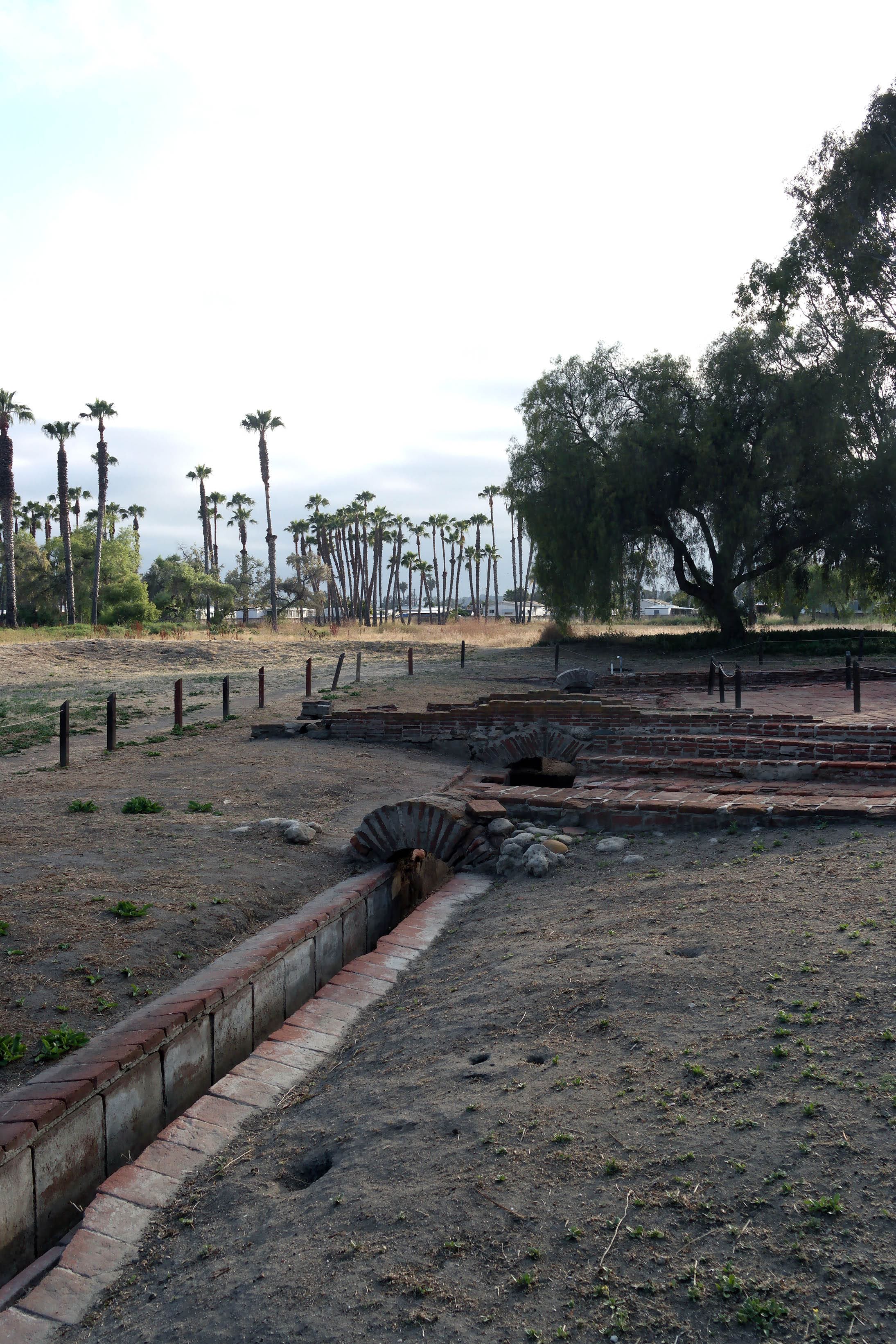
Next to the barracks is a lavanderia, where the indigenous people went to do their laundry during the olden days.

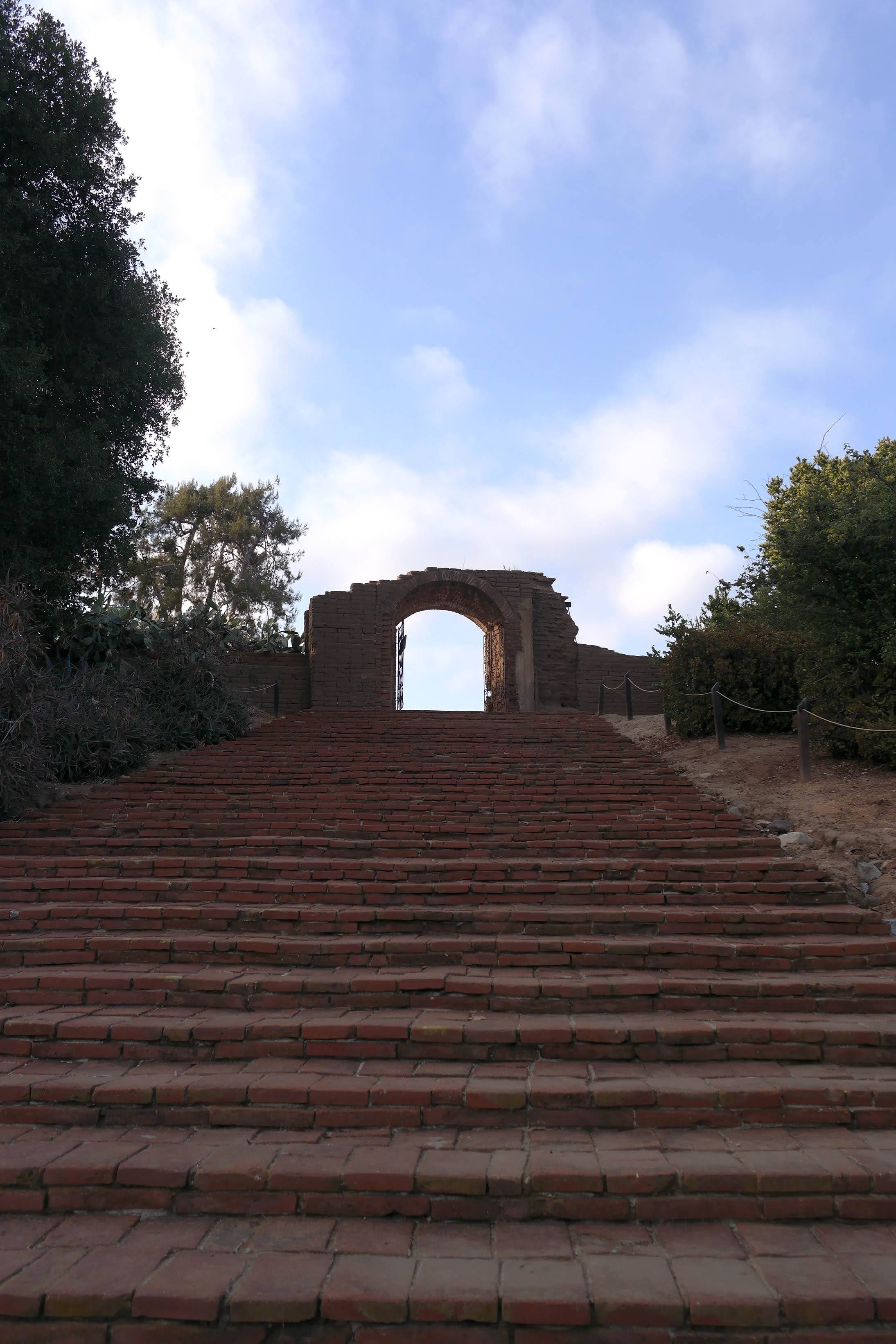
There are two brick archways set in adobe walls that lead down a hill to the lavanderia. The one nearest the barracks opens to a dirt path.


Large clusters of prickly pear cacti grow along the path.


A brick aqueduct and the washing area are at the bottom of the hill.


Brick stairs lead back up through the main entrance of the lavanderia.


A close-up of the adobe bricks that make up the wall.


Before heading off to the train station, I snuck a quick peek at the Saint Francis Garden by the Mission Retreat Center.