Monday, November 29, 2021

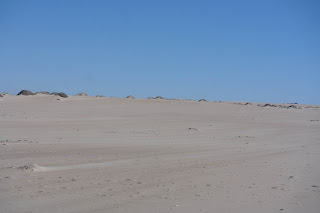
Guadalupe-Nipomo Dunes

In 1923, Cecil. B. DeMille built the City of the Pharaoh at the Guadalupe Sand Dunes for his film The Ten Commandments. I only became aware of this story after watching the 2016 documentary, The Lost City of Cecil B. DeMille, made by Peter Brosnan.


I stopped by the dunes twice this year, but neglected to do the proper research beforehand, so I wasn't able to visit the site of the buried movie set either time.

I believe the Rancho Guadalupe Dunes Preserve is about a mile or so south of the movie set, but I couldn't pinpoint the exact location by searching on the Internet.


From what I understand, directions might be available from a NAPA Auto Parts store which doubles as a small museum, and there is also the Guadalupe-Nipomo Dunes Center where many artifacts are on display, but it is currently open by appointment only.

In any event, the first time I stopped by was in July, when the dunes were closed off to protect the nesting grounds for California terns and snowy plovers.


It was windy and overcast in July, and not many people were visiting the dunes.


I visited again over Thanksgiving weekend, and you would almost think it was Summer.


The next time I pass by, I hope I'll be able to hike some of the trails and take a look at the site of the City of the Pharaoh.


Monday, November 15, 2021

DCon 2021

I attended DCon at the Anaheim Convention Center over the weekend, and it was the first event I've been to in two years.


The line seemed to be very long, but it actually moved very quickly even with checking for proof of vaccination at the door.


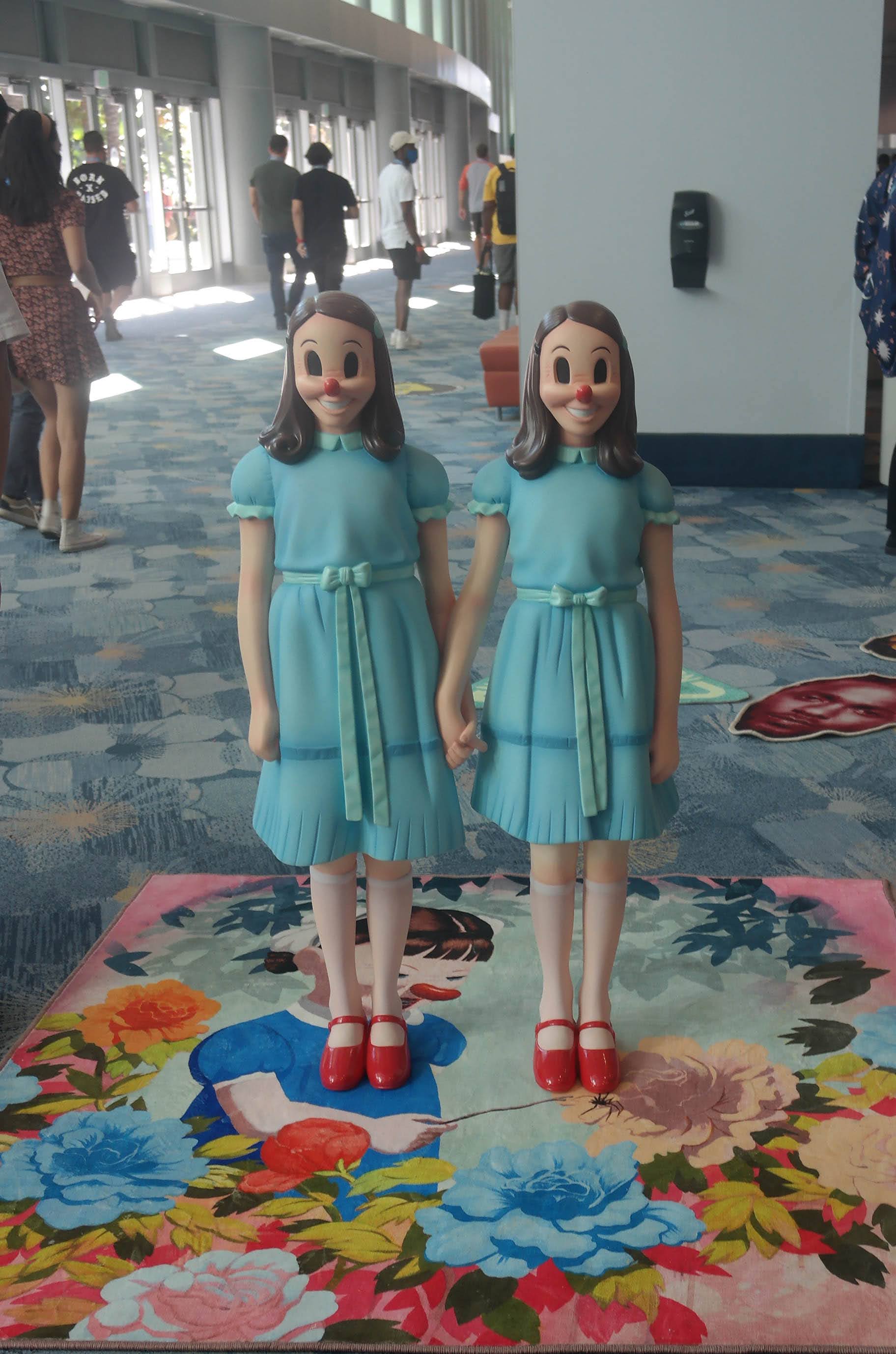
Various pieces were on display outside of the exhibit hall.

Autonomous logging robot
by Michael Marras

Come Play With Us
by Victor Castillo

Art toys from the Time Bandits booth.


Various subversive action figures from the DKE Toys booth.


Tokidoki was the only apparent overseas attendee at the con.


Goth cupcakes from Art of Miso.


Skull and taxidermy pieces by Brooke Weston.

Ram Ship


A doll in an iron mask from Ave Rose Art.


The item that I am most looking forward to are the upcoming sofubi Cthulhu toys displayed at the Mondo booth.


Some cool models at the FM Raw Toys and Art booth.

Tatogigeator

Gaaopilie

Some pieces from the Imperial Lotus Dragon Custom Show.


More assorted pictures.

2016 Ecto-1

Glass Ecto-1

Martian Toys mascot


Master 9 Eyes (M9E)

We Are Not Toys booth

I get the feeling that there were probably only two-thirds or half the number of vendors that attended in the past, but the number of visitors seemed high. I had a two day pass, but didn't bother going the second day. Still, it was good to go to an event after such a long time.


Sunday, September 12, 2021

Megadungeon

The traditional "dungeon" in D&D, video games, and fiction is often portrayed as the stronghold of an evil wizard or dark lord.


From Donjon by Sfar+Trondheim

Castlevania: Dracula X for SNES

Sometimes they are remnants of a lost civilization.


Yet despite their differences, it is presumed that all of these dungeons were built for some specific reason, and through the efforts of manual labor.

However, when it comes to megadungeons, there are many different thoughts regarding their nature since they do not always follow the type of logic that is referred to as Gygaxian "Naturalism".

DM David gives a nice overview of the subject, and mentions the influential article about mythic underworlds from Philotomy's Dungeons & Dragons Musings.

So where do these megadungeons come from? I image that the more mundane megadungeons are just much larger versions of standard dungeons.

Megadungeons such as Utumno from The Silmarilion seem to have been built just like a normal dungeon (albeit with the resources available to a deity).

Utumno by Ian Miller

Similarly, machines like the Builders (kensetsusha; 建設者) from Blame! can continuously build structures, to the point where they can entomb an entire planet.

From NOiSE

From Blame!

The living dungeon is also a concept that has been used in fiction. Typically, they are explained as a [super]natural phenomenon that appears in worlds where magic exists.

In DanMachi, the Dungeon is inimical to mankind, and the inhabitants are viewed as dangerous and irrational by the humans that seek to plunder the dungeon of its treasures.


Living dungeons in Dungeon Meshi on the other hand, are seen as more of a natural phenomenon. At least some dungeons can be controlled by the person who assumes the role of  lord of the dungeon.


The final type of dungeon that is closest to the mythic underworld is what I would consider the world within a witch's barrier (majo no kekkai; 魔女の結界) from Puella Magi Madoka Magica. The labyrinth (迷路) within the barrier seems to be created entirely from magic.


In the world of Madoka Majica, witches are created when magical girls reach peak despair. The FRPG world equivalent would be when magic users reach Wizard's Twilight (to use Ars Magica terms).

GERTRUD

As for actual mythic underworlds, I think of them more as the locations where HeroQuests take place, not places where adventurers go merely to kill things and aquire currency.